
Imagine opening a menu with 150 items.
At first, all that choice sounds great. There’s something for everyone.
Then you actually have to decide what to order.
Shopping online can create the same feeling. A collection with hundreds of products may look impressive, but the size of the selection doesn’t necessarily make it more useful.
There’s an important difference between giving shoppers more choices and giving them better choices.
More Isn’t Automatically More Useful
Adding products is easy to measure.
A collection grows from 50 products to 100. Another merchant adds hundreds of new options. A broader query brings thousands of additional results into consideration.
Those numbers can make a catalog feel more complete.
But shoppers aren’t trying to find the collection with the highest product count. They’re trying to find something that works for them.
If additional products mostly repeat what is already available, the selection has grown without necessarily becoming more helpful.
Better Choice Adds Something New
A useful option should give someone a reason to consider it.
Maybe it offers a different price point. Maybe it has features the other products don’t. It could work for a different use case, preference, or level of experience.
This is where variety becomes more important than volume.
Ten products that represent genuinely different options can sometimes give a shopper more meaningful choice than 100 products that are difficult to tell apart.
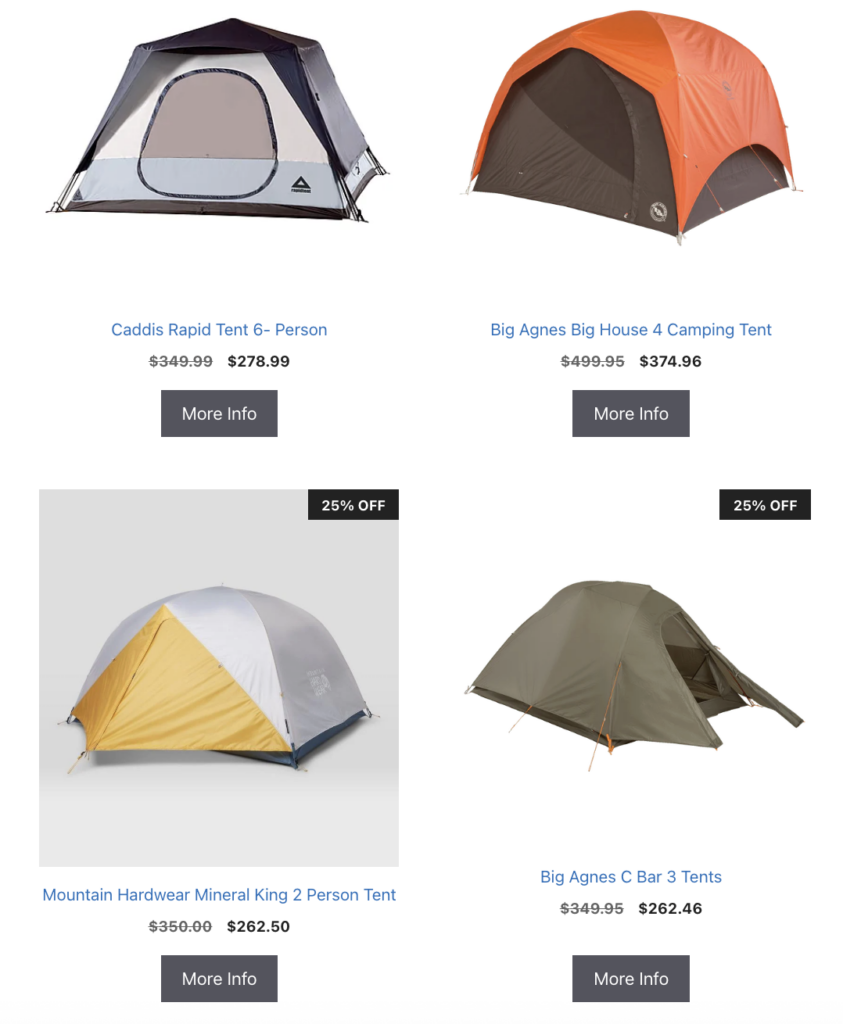
The question isn’t only how many products are available. It’s what each one adds to the decision.
Choice Should Help Answer Questions
As shoppers browse, they’re often trying to narrow down what matters to them.
Do I need the premium version?
Is there a simpler option?
What can I get within my budget?
Which features are actually worth paying for?
A useful collection makes those questions easier to answer.
Different products can represent different answers, allowing shoppers to understand the tradeoffs and gradually narrow their options.
When everything looks nearly identical, adding another product can create another decision without providing any new information.
There Is Value in Leaving Something Out
This can feel counterintuitive.
If a product matches the criteria for a collection, why wouldn’t you include it?
Because inclusion doesn’t always equal value.
A product that adds little beyond what is already represented may not improve the experience. In some cases, a more selective collection can make the strongest options easier to recognize.
This doesn’t mean every Product Set needs to be small. Large collections can still provide excellent choice.
It simply means product count shouldn’t be the only measure of completeness.
Better Choice Looks Different for Every Collection
There isn’t a perfect number of products that creates the right amount of choice.
A highly specific purchase may benefit from a focused group of options. A broad category may need considerably more variety. Some shoppers want to compare every possibility, while others want help getting to a manageable shortlist.
The purpose of the page should help determine what belongs.
Instead of asking whether there are enough products, it can be more useful to ask whether shoppers have enough meaningful options.
Make Every Option Count
More choice focuses on quantity.
Better choice focuses on usefulness.
The strongest collections don’t necessarily remove variety. They make sure that variety has a purpose.
When each option gives shoppers something meaningful to consider, a product collection becomes more than a long list of possibilities. It becomes a useful way to understand what is available and decide what is actually worth choosing.
For more information, check out documentation here.