
A strong Product Set shouldn’t depend too heavily on any one merchant.
Products move in and out of stock. Prices change. Feeds get updated. Merchant relationships evolve. When a Product Set pulls from several merchants, those changes are less likely to define the entire collection.
But resilience isn’t just about having a backup when something changes.
A thoughtful mix of merchants can create a Product Set with more variety, more flexibility, and more ways to remain useful over time.
Start With the Products You Want to Feature
When building a Product Set, it can be tempting to start with a favorite merchant and work outward.
Instead, start with the purpose of the collection.
What should someone expect to find here? What kinds of products belong? What price points, styles, or features would make the selection useful?
Once that foundation is clear, multiple merchants can help fill out the collection without allowing one retailer’s catalog to determine what the entire Product Set looks like.
Let Merchants Contribute Different Strengths
Not every merchant needs to play the same role.
One might have a particularly large selection, while another offers products at different price points. Another may carry options that are harder to find elsewhere.
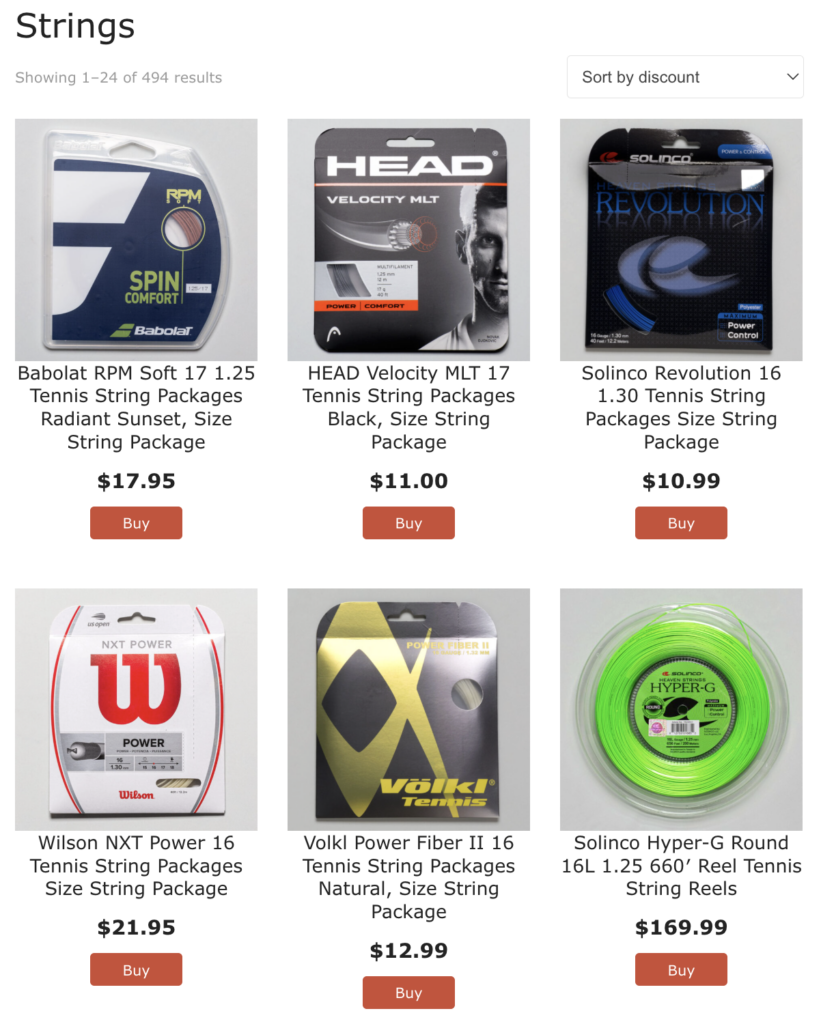
That variety can make the overall collection more interesting.
Rather than simply adding merchants to increase the number of products, consider what each merchant actually contributes to the Product Set.
The strongest mix is often one where different merchants add something meaningful.
Avoid Accidental Dependence
A Product Set can technically include several merchants while still relying heavily on one of them.
If most of the products come from a single retailer, a change to that merchant’s inventory or feed could still have a noticeable effect on the collection.
It is worth occasionally looking at how products are distributed across the merchants included in a Product Set.
The goal does not need to be an equal split. Some merchants will naturally contribute more than others.
What matters is understanding where the Product Set depends heavily on one source and whether that dependence makes sense.
More Merchants Can Mean More Options for Shoppers
Merchant variety can also improve the usefulness of the products themselves.
When similar or identical products are available from multiple retailers, shoppers may have more opportunities to consider differences in price, availability, or merchant preference.
Even when products are not identical, a broader merchant mix can introduce alternatives that one catalog alone might not provide.
That gives shoppers a selection shaped by the purpose of the Product Set rather than the limits of a single retailer.
Give the Product Set Room to Change
A resilient Product Set should be able to change without losing its identity.
Individual products will come and go. Merchant coverage will shift. New options will become available.
If the collection is built around a clear purpose and supported by several merchants, those changes can happen without requiring the entire Product Set to be reconsidered.
New products can take the place of unavailable ones while the overall idea behind the collection stays intact.
Build for the Collection, Not the Merchant
Multiple merchants are most valuable when they strengthen the collection rather than simply make it larger.
The goal is not to include as many retailers as possible. It is to create a Product Set that has enough variety and flexibility to remain useful even as the products and merchants behind it change.
When no single merchant has to carry the entire collection, the Product Set has more room to evolve while continuing to serve the same purpose.
To learn more, check out documentation here.