
When a Product Set starts to feel too broad, the instinct is often to add more filters. Narrowing by additional attributes can seem like the easiest way to improve relevance and tighten results.
Sometimes, though, the better move is simply reducing the number of products.
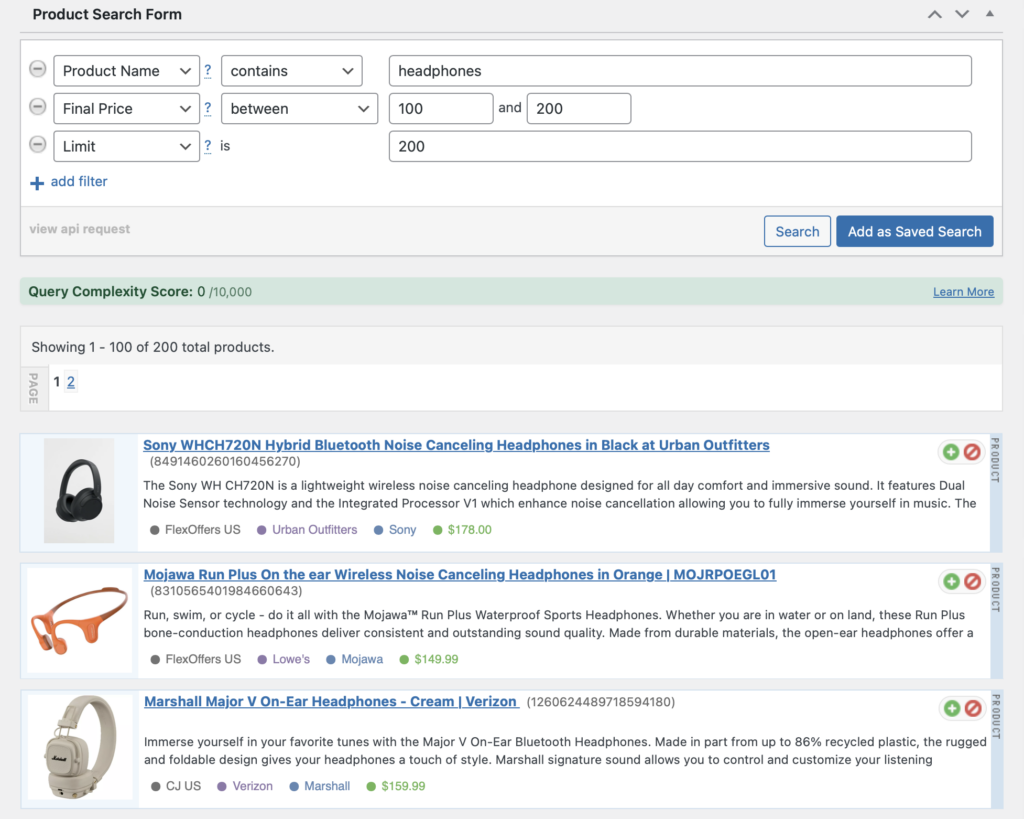
Filters are useful, but adding too many can make logic harder to manage and results less predictable. In many cases, trimming the product count keeps things clearer without complicating the structure.
Start With the Purpose of the Page
Every Product Set supports a specific goal. Some pages are meant to help visitors explore, while others are meant to help them choose.
If a page is focused on decision-making, a large number of products can make comparisons harder. Reducing the count keeps the set easier to scan and helps the strongest options stand out. Instead of asking visitors to sort through dozens of similar products, the page guides them toward a smaller, more intentional list.
The clearer the goal, the easier it becomes to decide whether fewer products would improve the experience.
Avoid Overcomplicating the Logic
Adding filters can tighten results, but it also increases complexity. Over time, heavily layered filters can make Product Sets harder to maintain and more sensitive to data changes.
Reducing product count, on the other hand, often preserves simplicity. You keep the core logic intact while presenting a more focused set of options. This approach is especially helpful for long-lived pages where stability matters.
Simpler logic tends to age better.
Let Stronger Options Stand Out
When too many products are included, individual options can start to blur together. Even strong products lose visibility when surrounded by a long list.
Reducing the count gives each product more space and makes differences easier to see. This is particularly helpful for comparison-style pages, where clarity matters more than volume.
Visitors don’t necessarily benefit from more options. They benefit from clearer ones.
Use Filters When Precision Is Needed
There are times when expanding filters makes sense, especially when a Product Set is pulling in items that don’t belong at all. Filters are useful for improving accuracy.
But when the products are all generally relevant, reducing the count is often the cleaner solution. It keeps the structure simple and the experience focused.
Both approaches have value. The key is choosing the one that improves clarity without adding unnecessary complexity.
Reducing product count isn’t about limiting coverage. It’s about making the page easier to use. When fewer products are presented thoughtfully, visitors can scan faster, compare more easily, and move forward with confidence.
To learn more, visit https://datafeedrapi.helpscoutdocs.com/.