

When a Shopper Question Deserves Its Own Article
By Casey
“Is the more expensive version actually worth it?”
It's a simple question, but the answer might not be.
Depending on the product, explaining the difference could involve comparing features, looking at long-term value, understanding who each option is designed for, and deciding whether the upgrade makes sense.
You could answer it in a few sentences on an existing product page. But would that really give someone enough information to make a decision?
Some shopper questions deserve more than a quick answer. They deserve their own article.
Not Every Question Needs a New Page
Product content naturally raises questions.
Some are straightforward. A shopper might want to know whether an item comes in another color, what materials it's made from, or whether it's currently available.
These answers usually belong close to the product itself.
Other questions require more explanation. They might involve comparing different approaches, understanding a category, or weighing factors that vary from one shopper to another.
The distinction isn't necessarily how complicated the question sounds. It's how much useful information someone needs to answer it properly.
A good starting point is to ask whether the question can be answered clearly within the existing page or whether a dedicated article would offer something more valuable.
Look for Questions That Require a Decision
Some of the strongest article ideas come from questions that influence what someone ultimately buys.
Consider the difference between these two questions:
Does this coffee maker have a built-in grinder?
Is a coffee maker with a built-in grinder worth buying?
The first can be answered with a product specification.
The second opens up a much broader discussion. It involves convenience, cost, counter space, maintenance, and personal preferences.
That kind of question creates an opportunity to explain the tradeoffs and help shoppers understand which option makes the most sense for them.
Rather than simply presenting information, the article becomes a resource for making a decision.
Pay Attention to Questions That Keep Coming Up
If the same question appears across multiple product pages, categories, or customer conversations, it may be worth addressing in a dedicated piece of content.
Repeated questions can reveal where shoppers need more guidance.
Maybe people consistently struggle to understand the difference between two product types. Perhaps a particular feature causes confusion, or a common assumption about a category deserves a closer look.
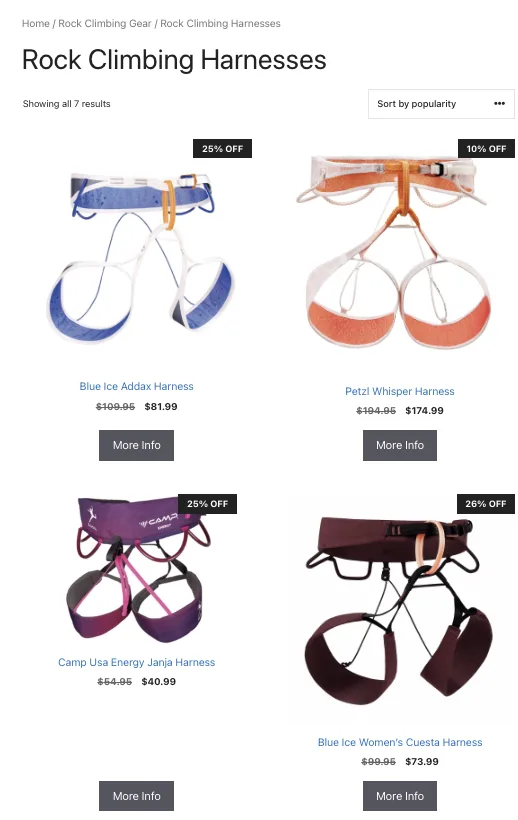
An article addressing that question can become a useful resource that supports several related pages.
Instead of explaining the same concept repeatedly in different places, you can create one thorough answer and connect readers to it wherever it's relevant.
A Good Article Should Go Beyond the Obvious Answer
Creating a separate article only makes sense if there's enough substance to justify it.
Repeating information that's already available on a product page doesn't necessarily make the content more helpful.
A dedicated article should add context, address related concerns, or help readers think through something they couldn't easily understand from a product listing alone.
For example, an article about choosing between two types of luggage could discuss durability, weight, storage, travel habits, and the situations where each option makes sense.
That gives the question room to be answered properly, rather than turning a short explanation into a longer page without adding much value.
Don't Let Every Question Become a Separate Article
It's tempting to turn every possible shopper question into a new content opportunity.
But too many narrowly focused articles can create unnecessary overlap.
If several questions are closely related, they may work better together in one comprehensive resource. If a question can be answered in a short paragraph, adding that information to an existing page may be the better choice.
The goal isn't to publish an article for every question someone could ask.
It's to recognize which questions have enough depth, relevance, and usefulness to stand on their own.
Think About Where the Answer Belongs
Before creating a new article, consider where someone would naturally expect to find the information.
A product-specific detail usually belongs on the product page. A question about how a feature works might fit within a buying guide. A comparison that applies across an entire category could deserve its own article.
Placement matters because even a well-written answer loses value if shoppers have trouble finding it.
When a new article is the right choice, connecting it to relevant product pages and related content can help readers reach it at the moment they need that information.
Let the Question Lead the Content
The best article ideas don't always begin with a keyword, a product category, or a new collection.
Sometimes they begin with a question that doesn't have a simple answer.
Those questions can reveal what shoppers are uncertain about, which decisions require more explanation, and where existing content could offer more support.
Before creating another article, consider whether there's a real question worth answering and whether a dedicated page would make that answer more useful.
When a shopper's question deserves more than a quick response, giving it the right amount of attention can turn a moment of uncertainty into genuinely helpful content.
For more information, check out written documentation here (opens in a new tab).